Where the steelworks shaped everyday life
There are parts of Ruda Śląska where the city's industrial history is impossible to miss. Kaufhaus is one of them.
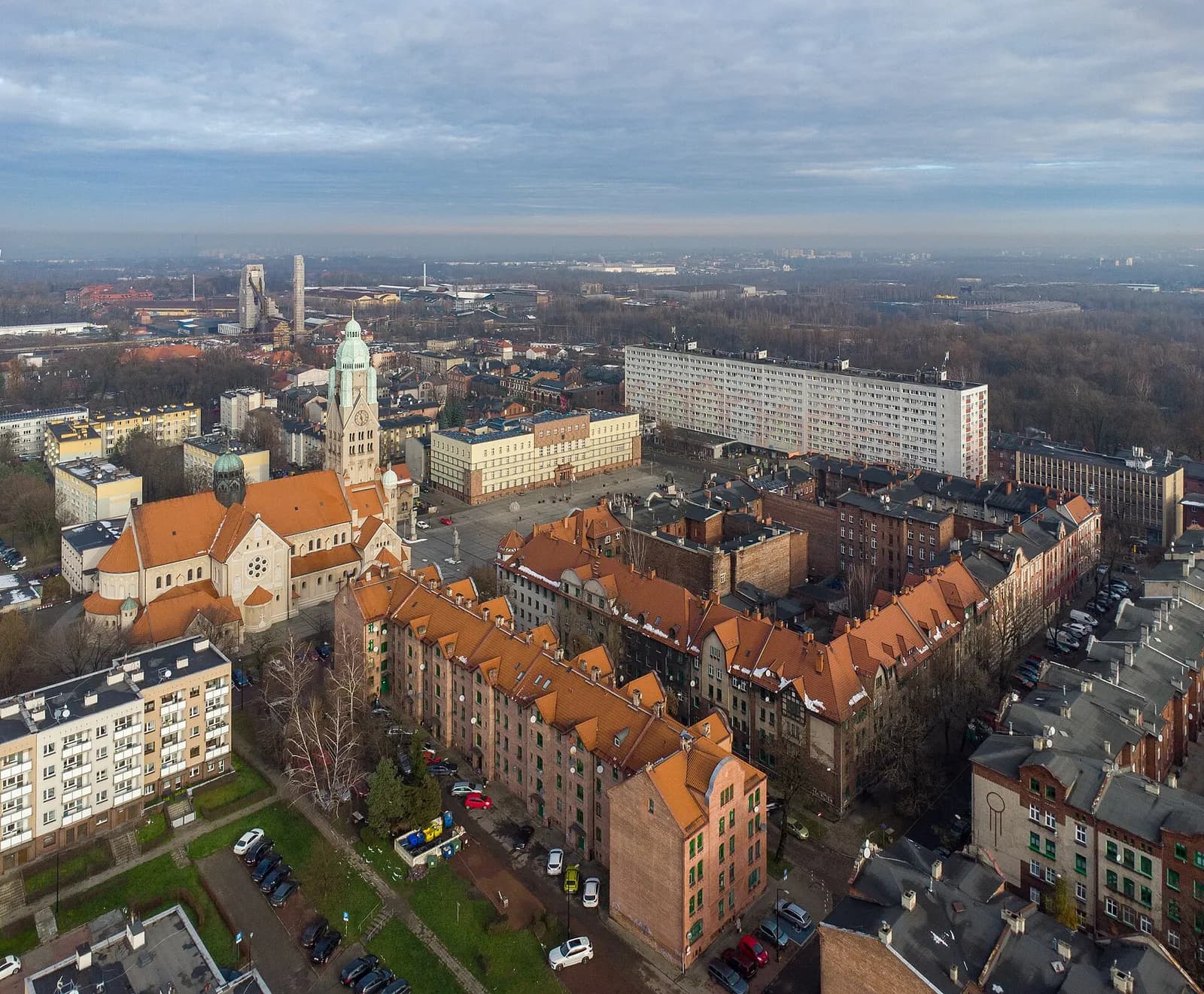
Around the streets of Nowy Bytom and Chebzie, rows of historic brick housing recall the days when the nearby ironworks provided not only employment but also homes and services for its workers.
Today, the industrial landscape has changed considerably, but the layout of the old neighbourhood still tells that story.
The origins of Kaufhaus go back to the 19th century. The Friedenshütte ironworks, established here in 1840, expanded rapidly and needed housing for its growing workforce. From around the 1870s, workers' accommodation began appearing in the area.
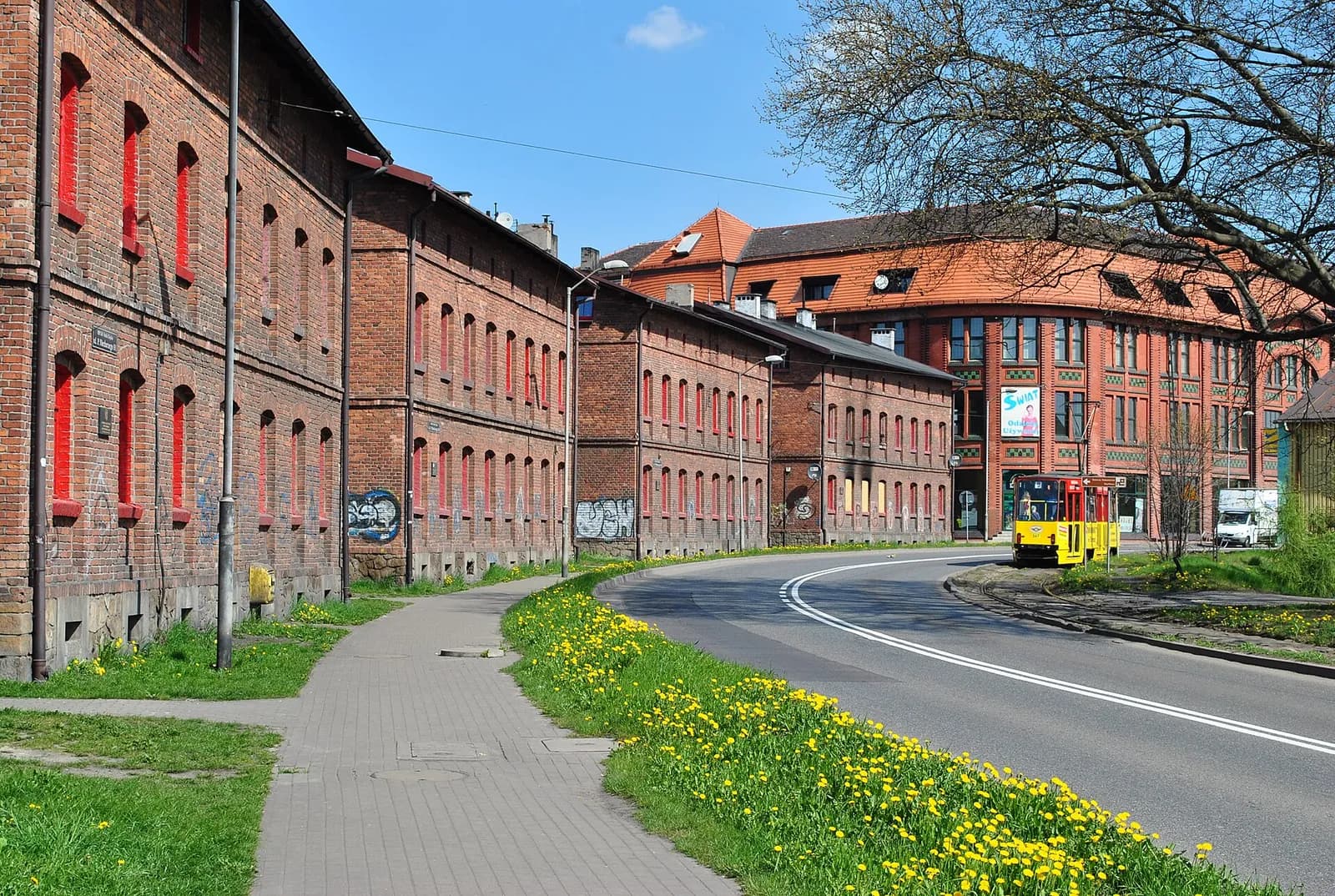
These early familoki were straightforward two-storey brick buildings. Flats were modest, and some facilities were shared. Courtyards provided space for outbuildings and other necessities, while the close-knit arrangement of the houses helped create the strong neighbourhood communities associated with Upper Silesian workers' estates.
At the time, the settlement was known as Gute Hoffnung, or Dobra Nadzieja.
The building that gave Kaufhaus its name
Then, in 1904, the neighbourhood acquired its defining landmark.
A large department store was built at ul. Piotra Niedurnego 99. Known simply as the Kaufhaus, the building eventually lent its name to the entire estate.
It was designed to serve the surrounding community, rather than simply to provide another shop. According to information from the building's current owner, the three-storey premises included retail space, lifts and even a slaughterhouse.
For the workers and their families living nearby, this meant that many everyday necessities could be obtained close to home.
The building also reflects the scale and confidence of the industrial economy that existed here at the beginning of the 20th century. Behind the housing stood a major ironworks, employing generations of local families and helping shape the development of Ruda Śląska itself.
Streets, homes and a changing city
Kaufhaus did not remain a fixed settlement. It continued to develop, with later housing appearing around Gwardii Ludowej, Podgórze, Dobrej Nadziei and Rudzka.
By the 1930s, the colony reportedly contained around 40 buildings and a range of services and facilities.
Its name changed as the political landscape of Upper Silesia changed. The settlement became known as Kolonia Styczyńskiego in the 1930s, following the incorporation of the area into Poland.
But the basic rhythm of life remained tied to the industrial works.
Home and workplace were close together. Shops served the workers. Neighbours lived side by side. The architecture was practical, but the community that grew around it gave the place its character.
What survived
The decades that followed brought enormous changes.
After 1945, the Kaufhaus building was used for several different purposes, including offices connected with Huta „Pokój, commercial activities and a music school. The PSS Społem grocery shop also operated there.
The wider estate had a more difficult history. Some buildings were demolished and others suffered from deterioration, leaving a smaller fragment of the original settlement.
The Municipal Conservator of Monuments in Ruda Śląska identifies the surviving buildings, including the former Kaufhaus and the houses at Gwardii Ludowej 21-23, as important elements of the city's historic fabric.
The Kaufhaus estate is also included in the city's municipal heritage record.
A new chapter for an old neighbourhood
The former department store itself entered a new chapter after being privatised in 1999. Restoration and adaptation work has since sought to give the historic building a contemporary future.
The wider neighbourhood has also seen regeneration. A first phase completed in 2011 included improvements to infrastructure and public facilities, while the Chebzie and Kaufhaus area remains part of the city's wider regeneration planning.
That makes a walk through Kaufhaus particularly interesting today.
The buildings are not museum pieces arranged behind glass. They are part of a living neighbourhood, with traces of different periods visible in the streets and architecture.
Look closely and the industrial history is still there: in the red brick of the familoki, in the scale of the Kaufhaus building and in the compact streets that once connected thousands of everyday journeys between home, shop and steelworks.
Ruda Śląska has changed dramatically since those days, but Kaufhaus remains one of the places where that earlier city can still be read in its original surroundings.
See more: One Day in Ruda Śląska: Historic Districts, Green Spaces and the Remarkable Topola Tekla
Image credit: Marek Mróz, Wikimedia Commons, CC BY-SA 4.0